Dog Pain Relief Blog

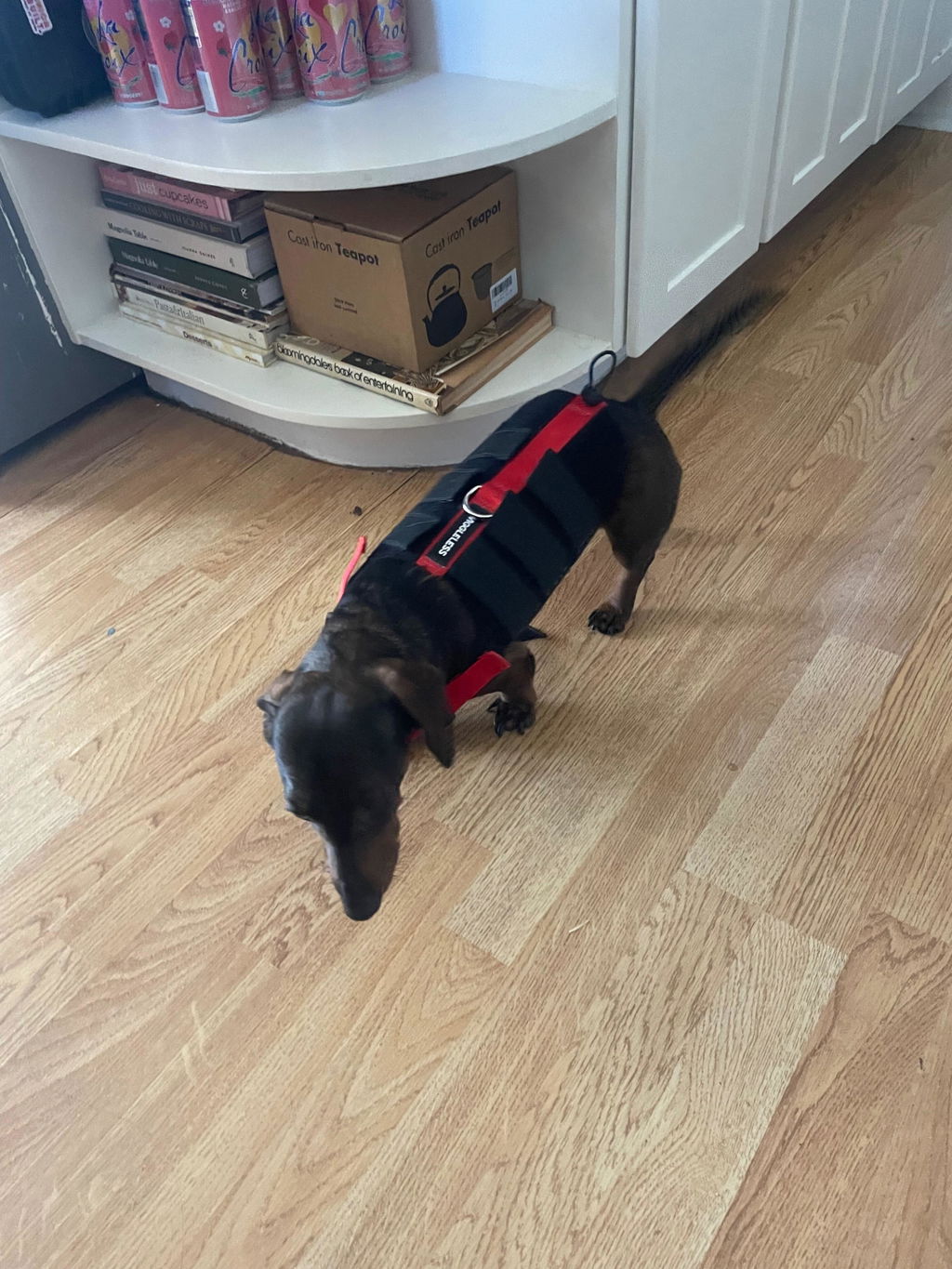
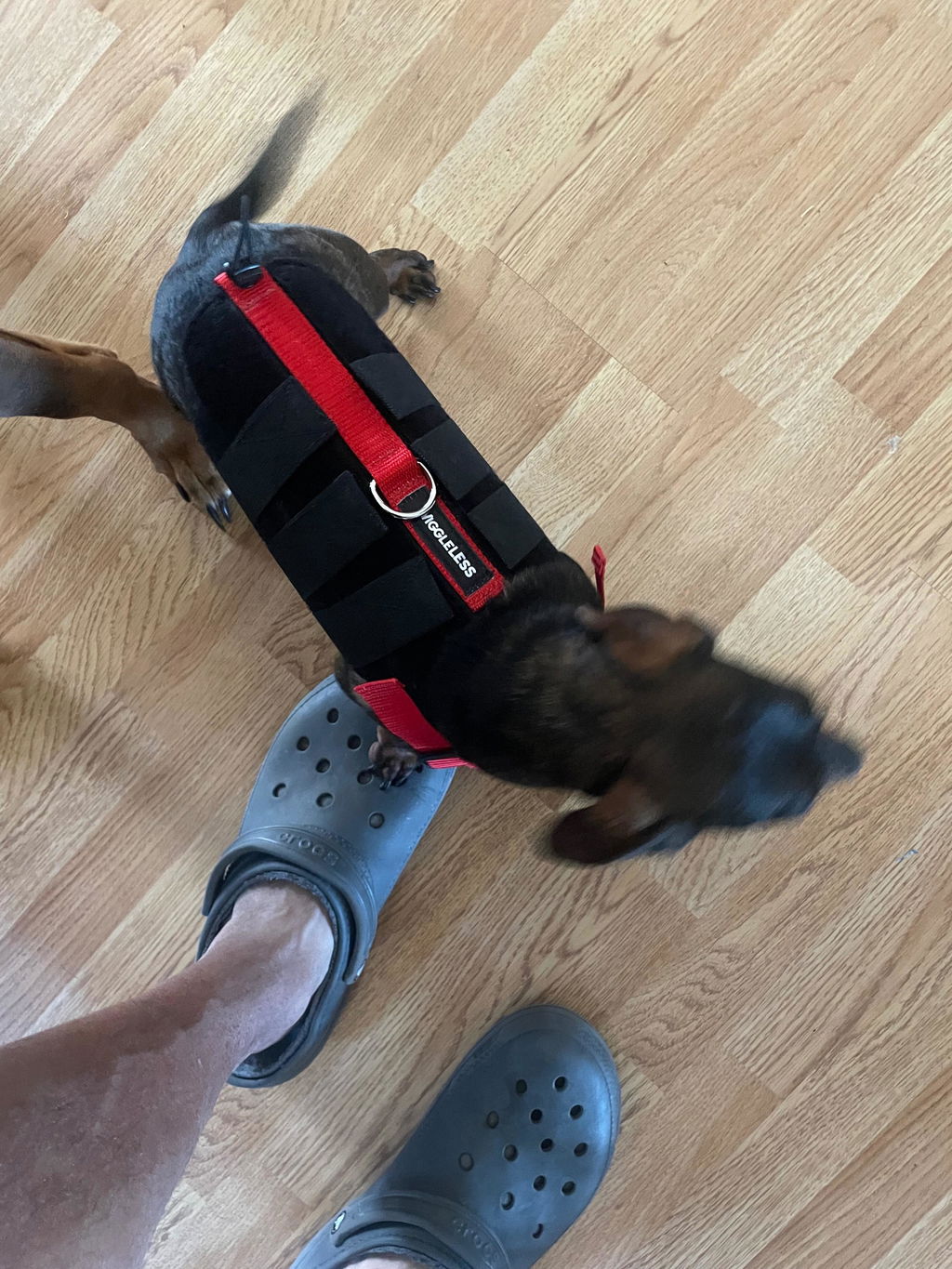
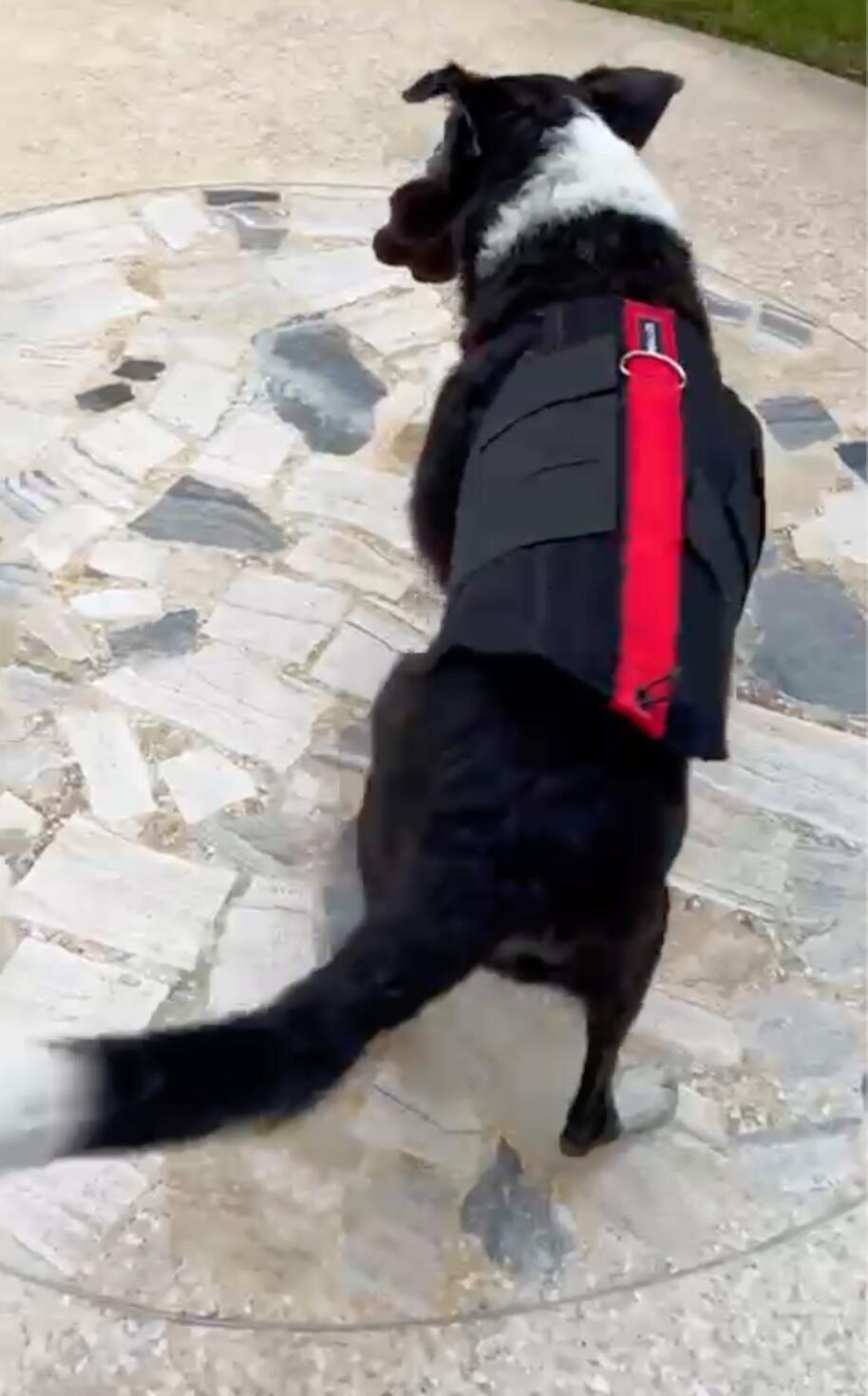
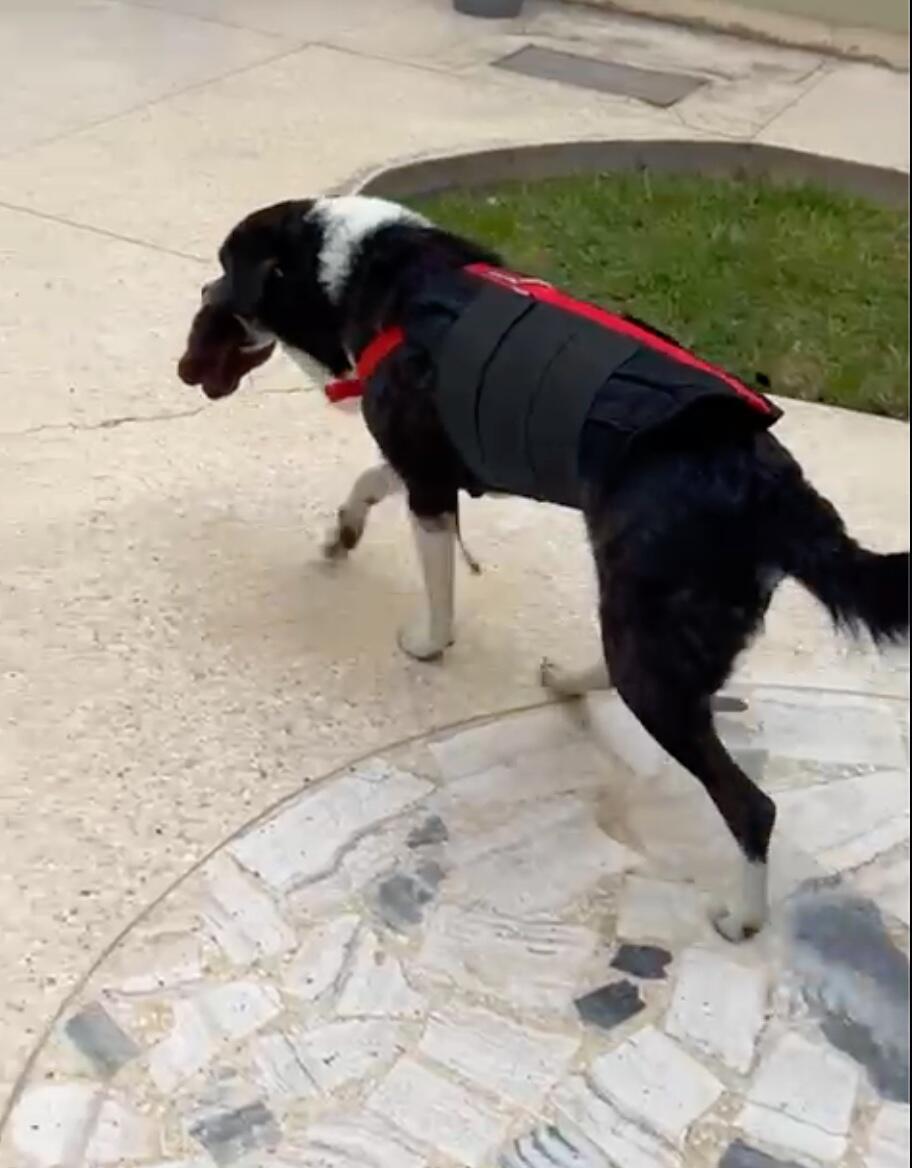
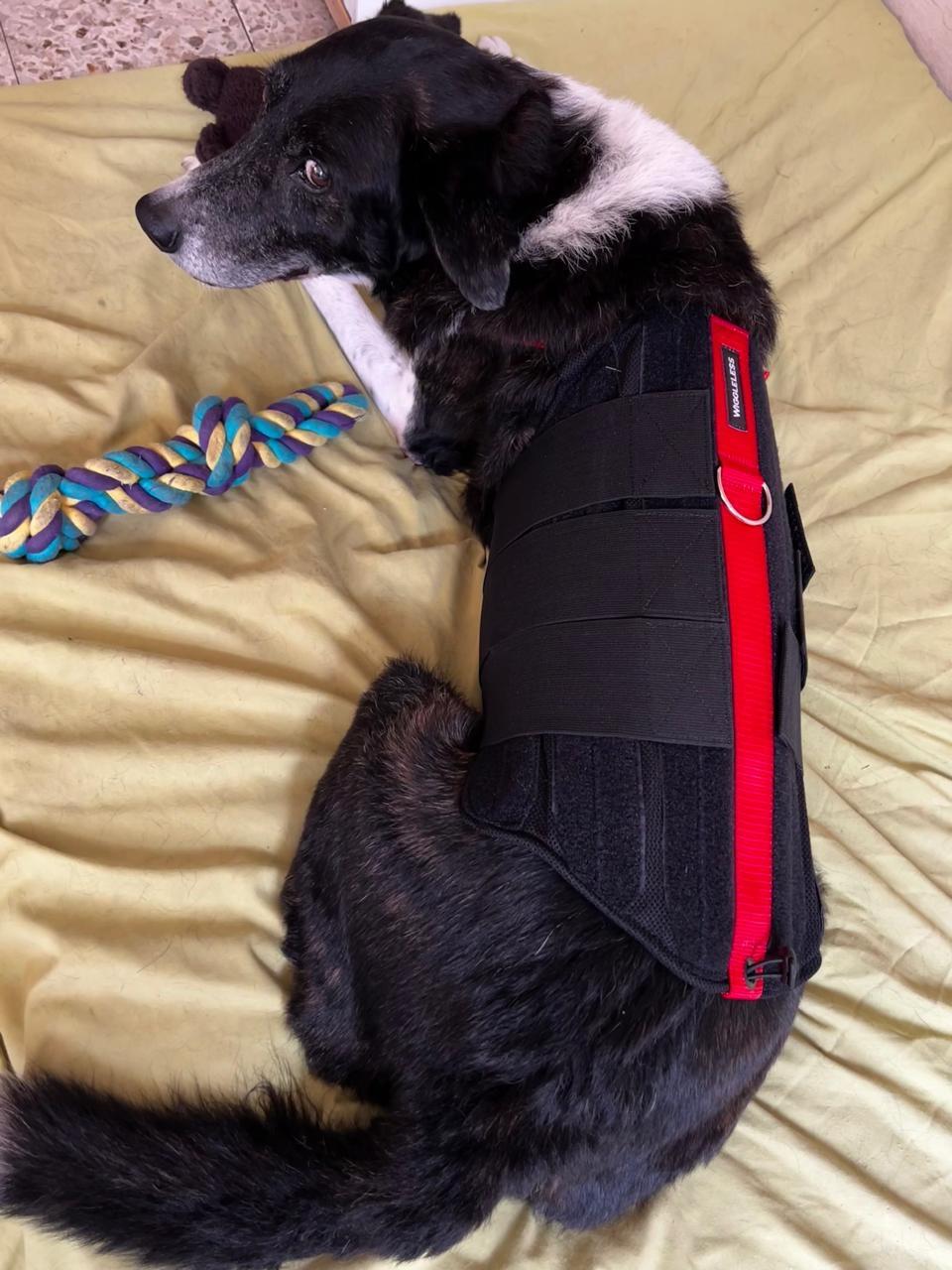
Dogs wearing a wiggleless back brace

Dog Pain Relief Blog

Henry's IVDD Story

Henry needed a dog cone alternative when he had stitches in his tail — As well as a dog back brace when he was diagnosed with IVDD. My mom works hard to help as many dogs as possible! My husband and daughters brought home a little ball of fur while I was going through treatment for breast cancer in 2001. Our golden retriever, Cowboy, was slowing down in years and we thought a puppy would be good energy in our home. We had never had a small dog before! Henry was such a tiny bean next to Cowboy, who he soon fell in love with—constantly pulling on Cowboy’s tail, nipping his ears and paws. Cowboy, our big red dog, remained steadfastly noble. He was patient and kind and eventually, I think he came to truly love Henry. When Cowboy eventually died of a blood disease Henry missed him so much—and that’s when June joined our family. Henry, like many dachshunds, (one in every five), was diagnosed with intervertebral disc disease (IVDD) Canine Intervertebral Disc Disease when he was four years old after showing signs and symptoms of back pain. I nursed him back to health several times with veterinary care (medication and crate rest) and so much love. But Henry needed more. He needed Back stability. Firm support. Stress relief. He needed a back brace. It wasn’t until Henry started wearing his WiggleLess® brace for that he no longer went to the vet for back problems. Henry also used his WiggleLess® as a dog cone alternative when he had a lump removed from his tail and he needed to leave the surgical area alone. Instead of wearing an awkward cone around his head Henry wore a WiggleLess®. He was comfortable while healing. WiggleLess® works great as a dog cone alternative for affected/injured areas on the hind end of a dog. The brace has built-in boning to curtail twisting and sharp turns to the tail.  My sweet, sweet Henry passed away in August 2012 from cancer. He was a gentle, sweet soul and will be forever loved and missed by our family. He and June are my WiggleLess® ANGELS and a constant source of inspiration! In Loving Memory of June and Henry Our Wiggleless® Angels! We're watching over ALL dogs now! Wiggleless wants every animal to live the highest-quality life they deserve.  I love you forever June and Henry!
June the Dachshund dog who inspired WiggleLess Back Braces

Dog Pain Relief Blog

June And Her Dachshund Back Problems

June, while in her prime, was diagnosed with IVDD (intervertebral disc disease), a string of fancy words that translate into lots of back problems for dachshunds.June’s life with IVDD began when she was only two years old and weighed about eight pounds. While playing in the backyard, she injured her back to such a degree that she could barely walk. I rushed her to the ER, where the on-call vet administered Rimadyl for inflammation, Tramadol for back pain, and Robaxin to relax muscles. IVDD Disc Disease Fast Facts. But the worst was yet to come; my rambunctious pet was to be “confined to rest” for a month! Whaaat?With a lot of diligence on my part, June recovered, only to re-injure her back when she was three years old! After a series of x-rays and veterinary examinations, I learned that June was a “chondrodystrophic” breed, meaning a dog with short legs and a long spine (not always), prone to IVDD. When the vet told me that June’s back was like a “ticking time bomb” and suggested spinal surgery or maybe even euthanasia, I panicked. Was my sweet angel destined to a life of pain and other maladies that can accompany IVDD, such as shaking, loss of appetite, and bladder control? I felt an immense sadness and frustration. Why did June have to suffer so? I took a little time to worry and commiserate, but then…I got busy.I realized that if June remained still, she wouldn’t injure her back. But what kind of life is that for a dog? Dogs need to be active. I had to find a way to keep June from twisting her spine and wiggling so much while she went about her daily business. That’s when the solution came to me. June needed a back brace for dogs, something like what the chiropractor gave me when I had injured my back.I immediately combed through the pet shops and searched online. I even asked my vet for a dog back brace, but there was nothing out there that would work for June. Unwilling to give up, I hired a seamstress, and together we designed a cheery, yellow vest with strong boning to keep June from wiggling. And guess what? It worked! And that was the very first WiggleLess® dog back brace. It afforded June the comfort and stability she needed to live a full, comfortable, and happy life!Then there’s my sweet, precious Henry! My husband and daughters brought home this little ball of fur while I was going through treatment for breast cancer in 2001. He and June brought my spirits up so many times. Henry was diagnosed with IVDD early on as well. Henry, also a mini longhaired dachshund, was stockier than June with a shorter spine. Fitting him for his WiggleLess®  dog back brace afforded me time to redesign a more adjustable and effective support.Fast forward to today, and there are now eight sizes of WiggleLess® dog back braces available, providing comfortable, firm back support for many breeds and builds of dogs with back problems.Sadly, June passed away in 2011 from cancer. Henry also passed on in 2012 from a long and well-lived life. They both inspired me to create WiggleLess® dog back braces. June and Henry were spinally challenged, chondrodystrophic mini long-haired dachshunds. But to my family and me, they were so much more. They were a friend, a constant source of joy and love, and the inspiration behind WiggleLess® dog back braces.June continues to inspire me and to watch over her friends who need the same support she did. It is she who keeps me motivated, ensuring WiggleLess® dog back braces are available to most dog sizes and shapes with back problems. June is and always will be our WiggleLess® Guardian Angel. We love you, June! In Memory of June and Henry It started with our bad backs! Now we want to help other dogs who suffer from dog back pain Our WiggleLess® Angels Rest In Peace My Beloveds
Our Story

Dog Pain Relief Blog

Our Story

Lisa, a registered yoga instructor, licensed massage therapist,  ordained minister, and breast cancer survivor,  is passionate about living a full and rewarding life. Her many vocations are fueled by one purpose: to inspire others to live a high quality of life no matter what their circumstances may be. And that purpose to inspire others includes her pets, in fact, ALL animals on earth! Lisa shares her home with her husband, two daughters (when they are visiting), three chickens, and three adopted dogs: Ryder (Cocker Spaniel), LaVerne (Schnauzer/Doxie mix), and Chai (Doxie/Jack Russell mix). They joined the family from the local Humane Society when both of the family’s mini longhaired dachshunds, June and Henry, passed on.June had been Lisa’s inspiration for creating the WiggleLess Dog Back Brace. When June was just two years old, she began to have back problems—horrendous back problems that resulted in emergency room visits, strong medication, and complete crate rest. “I was angry,” says Lisa, remembering having to confine her rambunctious June. “I was shocked to learn that June had intervertebral disc disease (IVDD) and that her quality of life could be compromised forever. I had never heard of IVDD! The thought of June having back surgery or living with doggy wheels if her spine was compromised truly worried me.” Nursing June through two long back injury recoveries gave Lisa the opportunity to put her many skills and life experience to effective use. She had always felt a special kinship with animals and had been trained in animal massage therapy as well as animal communication. “I’ve had back issues myself, and they always flared up at the most inopportune times,” says Lisa. “I could relate to what poor June was enduring.” I knew she needed more than strong medication and crate rest—it simply wasn’t enough.Lisa recalled how a back brace had supported her when she had thrown out her back grooming a horse. She immediately searched the marketplace for canine back support but found no back braces for dogs available. With the help of a handy seamstress, Lisa designed a dog back brace to support her dachshund’s torso and lengthy spine. June wore the dog back brace throughout her recovery from her second back injury, and it prevented her from twisting and wiggling. She recovered fully, but her back remained compromised. “June wore her WiggleLess® brace nearly every day until cancer caught up with her —and so did Henry,” says Lisa.Today, Lisa is extra busy overseeing the production of WiggleLess® Dog Back Braces. “It all comes down to the quality of life for you and your pet,” says Lisa. “I loved June and Henry in the same intense way that you love your dog. I refused to watch them suffer. I created the WiggleLess Dog Back Brace so that they could live a fulfilling life. My mission is to provide you and your dog the same comfortable, firm, back support and the accompanying peace of mind.” And what about Ryder, LaVerne, and Chai, you might ask? Why they love their WiggleLess Dog Back Braces whenever they’ve overdone the fun and end up with an aching back! In Loving Memory of June (2004-2011) and Henry (2001-2012) Our Wiggleless® Angels! We want to help other dogs who suffer from dog back pain! Chai, LaVerne, and Ryder wear their WiggleLess® dog back braces whenever they’ve overdone the fun!
Tail Injuries

Dog Pain Relief Blog

Tail Injuries

Tail Injuries can be minor to serious. The  following blog discusses types of tail injuries, what to look for and when to call the vet. 
5 Ways to Help Your Dog with Back Pain

Dog Pain Relief Blog

5 Ways to Help Your Dog with Back Pain

As a pet owner, it can be troubling to see your pet dog in pain. Back pain, especially, can be a debilitating condition impairing mobility, whether it is on account of advancing age, arthritis, other chronic conditions, or overexertion. The common indicators that your dog is experiencing back trouble are a sudden lack of enthusiasm in games or activities they once enjoyed. In some extreme cases, back pain may also impact their ability to move or, worse, even stand. Breeds that are susceptible to back conditions include the American Cocker Spaniel, Dachshund, Lhasa Apso, Shih Tzu, Bulldog, Pug, Poodle, and Scottish Terrier. But of course, even dogs that do not belong to these breeds may experience back trouble due to various reasons. Depending on your dog’s specific situation, they may require one or a combination of treatments such as weight loss, a dog back brace, medicines, or massage. 5 Tips for Easing Your Pet Dog’s Back Troubles  Back pain can cause your energetic and enthusiastic pet that was once prone to racing or bounding off in your yard to lie still in a corner. But there’s no reason to worry, as there are several potential solutions for helping improve your dog’s quality of life. Here are 5 potential solutions for facilitating recovery and mobility while mitigating your beloved pet’s back pain.  1. Support their Walkability with Simple Measures Dogs can have a hard time walking on slick, smooth surfaces such as tiles or hardwood floors, especially if they’re facing back issues. The simplest and most effective way to lend them support so they can carry on their day-to-day activities without discomfort is by providing increased grip. Non-skid or anti-slip carpets and rubber mats can help provide traction indoors. Another option is Dr. Buzby's Toe grips, worn on the toenails, which allow better grip on slick floors.  2. Ease their Pain and Enhance Mobility with a Dog Back Brace Back pain may be caused by injuries, disease, or simply aging. Some conditions can be improved with a back brace. Even senior dogs that have a weak spine can benefit from wearing the right dog brace. IVDD is a condition that, if ignored, can cause further deterioration.  However, a dog back brace for IVDD support can offer tremendous relief and back stability, improving your best friend’s quality of life. Choose an IVDD dog brace that offers built-in boning for enhanced support.  3. Help Them Lose Weight  While weight loss may not seem directly connected to your dog’s back issues, helping your dog lose the extra pounds can offer some relief. A leaner body with less weight to lug around automatically reduces the strain on their back, thereby enhancing mobility as well as pain relief.  4. Animal Rehabilitation Therapy Besides back braces for dogs, animal rehabilitation therapy under the guidance of a veterinarian or physical therapist with animal training can help provide relief, especially for specific conditions of the spine. Also, consider getting them a crate to sit and lie down in so they don’t feel inclined to jump on the bed or couches that are typically situated at a high level.  5. Consult a Vet for Pain Management Medication Medication is a natural contender on this list. While you may want to consider reducing your four-legged friend’s dependency on drugs, they can be indispensable in the management of pain. However, be sure to check with a vet before administering any pain-relieving or other types of drugs. We hope that with our recommendations, you’re able to offer support and pain relief to your furry friend. Every situation is unique, and there may be no one-size-fits-all approach, so trying a combination of remedies may facilitate optimum healing and support.
dog cowering scared of fireworks

Dog Pain Relief Blog

5 Tips to Calm Your Dog During Fireworks Seasons

Reduce their Stress! Fireworks are seemingly synonymous with the Fourth of July holiday, but they can happen any time of year. For pet owners living near a theme park like Disneyland, fireworks are a nightly occurrence. And of course, there are other big celebrations, including New Year’s Eve.  Many pet owners know the stress and anxiety these loud blasts can induce in their dogs. From shivering and hiding to whining and barking, many dogs will clearly show their fear of fireworks, which can cause anxiety throughout the household.  While fireworks can’t realistically be stopped by pet owners, there are some things we can do to ease the stress.  1- Create a safe, relaxing space. Make sure your dog has a comfortable, secure location in your home where he can go to when the fireworks start. Close up the windows and turn on some soothing music or TV. Have some treats and a favorite toy handy. Speak in soothing tones to your dog and give him a nice head scratch or belly rub — whatever type of attention he prefers.  2- Ear Muffs. The simpler way is a Swim Snood from DogLeggs. The fabric is made of a material similar to that used in wetsuits. When it's wrapped around the ears, it muffles the sound with comfort. It comes in 4 great colors too! 3- Explore targeted pulsed electromagnetic tech. Assisi  Animal Health has developed a loop device for use in pets for both pain and anxiety management. Both utilize targeted pulsed electromagnetic field (tPEMF) signals to induce a specific benefit. Through a Canine Calmer, the signals from the loop are directed to areas of the brain causing anxiety symptoms. The loop, which is available with a vest or without, resembles a halo over the dog’s head when used. Treatment involves two 15-minute sessions daily for four to six weeks. 4- Get a compression shirt. Swaddling a dog can work in much the same way as swaddling a baby. It may provide a sense of calm to an anxious pet. The  DogLeggs Surgi-sox Torso offers a little extra, too, because it is also a soft liner that can be worn under the WiggleLess Dog Back Brace and can also help contain loose fur for shedding dogs. For use around fireworks, make sure to get your dog used to the shirt in advance of the fireworks so it doesn’t become an additional stressor.  5- Talk with your Veterinarian. Your Vet is an expert in ways to help calm your pet with training techniques and medications. 
5 Steps to Wellness for Your Dog

Dog Pain Relief Blog

5 Steps to Wellness for Your Dog

Follow 5 simple steps to improve your dog's quality of life, including finding quality food, ensuring daily activity, and guarding against environmental toxins.
Dog wearing a harness

Dog Pain Relief Blog

Dog Harness Basics: What Kind of Harness Does My Dog Need?

There are many types of harnesses available for different canine needs, and each provides their own set of potential benefits. Lets talk about five common types. 
Dog wearing a shirt

Dog Pain Relief Blog

5 Benefits of Comfort Shirts for Dogs

A comfort shirt serves many purposes for your four-legged friend, and when worn properly, can be a much-needed addition to your dog’s everyday routine.
Frenchie dog wearing a red and black wiggleless back brace

Dog Pain Relief Blog

The Frenchie IVDD Crisis

🐾 Why "One-Size-Fits-All" Back Braces Are Failing Your Barrel-Chested Best Friend   The sight of a French Bulldog—that signature snort, the big bat ears, the compact, comical waddle—is pure joy. But for thousands of Frenchie owners, that love is often coupled with a persistent, low-grade fear: the silent threat of Intervertebral Disc Disease (IVDD). IVDD is a degenerative condition where the cushioning discs between the vertebrae bulge or rupture, causing excruciating pain, nerve damage, and potentially permanent paralysis. For French Bulldogs, IVDD is not just a risk; it's practically a genetic inevitability due to their unique, purposefully bred structure. If you are a Frenchie parent reading this, you are likely already in the fight, or you are preparing for it. You have seen that hesitant step, the reluctance to jump, or heard the yelp that signals spinal pain. You know that time is the enemy, and finding the right support is everything. You may have already tried generic back braces, only to find them slipping, chafing, or failing to offer the rigid, comprehensive support your dog needs. This article is about confronting that frustration head-on. It’s about understanding why your Frenchie is different, what that means for their recovery, and why the WiggleLess Back Brace is the only solution engineered to conquer the unique physical challenges of the barrel-chested French Bulldog.   💔 Part I: The Why – The Emotional and Anatomical Truth of the Frenchie The Fear That Keeps You Up at Night   The emotional burden of owning an IVDD-susceptible breed is immense. The Vigilance: Every unexpected sound, every slightly off movement, sends a jolt of panic through you. Is that a yelp of pain? Is their tail wagging less vigorously? You are constantly monitoring, calculating the risk of every jump and every zoomie. The Guilt: French Bulldogs are specifically bred for their signature appearance—their compact body, short legs, and deeply curved spine (often complicated by hemivertebrae, an abnormality where the vertebrae are misshapen). In our heart of hearts, we know their structure makes them vulnerable, and that knowledge creates a persistent, heavy guilt. The Financial Anxiety: You are acutely aware that a severe IVDD episode means an emergency vet visit, thousands of dollars in diagnostics, and potentially $5,000 to $10,000 for life-altering surgery. Every preventative measure, every dollar spent on support, is an investment in avoiding that catastrophic expense. We understand this fear. We know you don’t just love your Frenchie; you are obsessed with them. They are your companion, your shadow, and your little comedic genius. When they hurt, you hurt.   The Anatomical Reality: Why Frenchies Break the Mold   To understand why generic braces fail, you must first understand what makes a French Bulldog’s spine unique compared to a Dachshund or a Cavalier King Charles Spaniel—breeds often associated with IVDD. The standard dog spine is relatively long and straight. A standard brace is designed to compress and stabilize along that uniform line. The Frenchie, however, presents two major challenges: The Barrel Chest and Wide Rib Cage: Frenchies have a profound width in their rib cage. This “barrel” shape means their spine is not easily accessible for stabilization from the sides. Generic braces, designed for narrower bodies, cannot cinch down effectively enough to achieve the necessary spinal immobility. They slide up, they slide down, and worst of all, they shift laterally, allowing the very spinal movement you are trying to prevent. The Compressed, Curving Spine: The spine of a French Bulldog is inherently shorter, denser, and often exhibits kyphosis (an upward curvature) and/or is affected by hemivertebrae. This lack of a straight line makes stabilizing the correct segment incredibly difficult for a brace designed on a straight model. The pressure points are entirely wrong. When you use a standard brace on a Frenchie, you’re trying to fit a square peg in a round hole—a futile, frustrating, and potentially dangerous exercise that gives you a false sense of security.   ✅ Part II: The What – Introducing the WiggleLess Solution   The Problem Solved: Stability Where It Matters Most   The entire purpose of a back brace during an IVDD crisis (or for preventative use) is to enforce spinal mobility within a limited range of motion. The discs cannot heal if the spine is flexing, twisting, or compressing. The WiggleLess solves the Frenchie’s unique stability problem with three proprietary design features:   1. The 3-Point Barrel-Lock Stability System   Generic braces stabilize via two points: the top and the bottom. The WiggleLess utilizes a proprietary 3-point system designed to hug the unique contours of the Frenchie’s body, preventing slippage caused by their wide rib cage. Point 1 (Chest Cradle): A deep, wide front panel that cradles the profound Frenchie chest, preventing the brace from sliding backward over the shoulders. Point 2 (Abdominal Anchor): A secure, adjustable mid-section that stabilizes the soft belly, keeping the brace from sliding forward or shifting side-to-side. Point 3 (Spinal Bridge): A rigid dorsal support shell that provides the actual immobility—and because Points 1 and 2 are locked onto the Frenchie’s unique shape, this semi-rigid boning stays precisely where it needs to be, over the most vulnerable part of the spine. This system guarantees that the stability your Frenchie needs for recovery is maintained 24/7, even when they get the urge for a wobbly little walk.   2. Contoured for Kyphosis (Curvature)   Since many Frenchies have some degree of spinal curvature (kyphosis) and hemivertebrae, a straight, flat brace shell is uncomfortable and ineffective. The WiggleLess brace features adjustable straps and waist cords. It doesn't attempt to flatten the natural shape; it supports it. This design ensures pressure is distributed evenly across the semi-rigid boning, not focused on a single, painful point on the protruding vertebrae. The result is superior comfort, which leads to better compliance—meaning your Frenchie is more likely to wear it consistently, which is absolutely critical for healing.   3. Brachycephalic-Specific Comfort and Fit   French Bulldogs are prone to sensitive skin, heat sensitivity, and deep skin folds. We took every detail into consideration: No-Rub Edging: All edges are softened and reinforced to prevent chafing in the armpit and groin areas—common failure points in standard braces when worn by barrel-chested dogs. Breathable, Moisture-Wicking Liner: The inner liner is designed to maximize airflow, reducing heat buildup in a breed already prone to overheating. Precision Adjustability: The high degree of adjustability means you achieve a snug, supportive fit without cutting off circulation or irritating the skin, which is often a trade-off with generic sizing.   The Proof: What WiggleLess Delivers That Others Cannot   Feature of WiggleLess Standard Brace Performance on Frenchies Benefit to Your Frenchie 3-Point Barrel-Lock System Shifts laterally, slides off the spine, and allows movement. Guaranteed Stabilization: Eliminates lateral (side-to-side) spinal movement, the most common cause of re-injury. Anatomical Contouring Creates uncomfortable pressure points on the curved spine. Maximized Comfort & Compliance: Supports the spine’s natural curvature, reducing pain and ensuring consistent wear. Deep Chest Cradle Too narrow, often chafes or sits too high/low. Perfect Fit Security: Locks the brace into place despite the wide rib cage, providing true, rigid support. Veterinarian Endorsed Often used as a last resort or a preventative. Trusted Recovery Tool: Vets specifically recommend WiggleLess for Frenchies recovering from Grade I-IV IVDD to ensure successful, non-surgical recovery.   The Urgency of Inaction   We know you love your Frenchie, and we know you want the best for them. But every day you rely on an ill-fitting, generic brace is a day the disc has a chance to slip further, potentially turning a manageable Grade I injury into a devastating Grade V paralysis. Spinal healing demands immediate, uncompromising immobility. Do not wait for the next yelp. Do not wait for the moment you realize the generic brace slid completely off during their nap.   The Promise of Peace of Mind   The WiggleLess Back Brace is not just a medical device; it is your ultimate tool for conservative management (CM). It allows you to participate actively and effectively in your Frenchie’s recovery, giving you back a sense of control over a scary situation. When you secure the WiggleLess, you know, with 100% confidence, that you have provided the absolute best support possible for their unique body. Your Frenchie deserves a solution that respects their breed-specific needs. They deserve a brace that fits, stays put, and truly allows their spine the rest it requires to heal.   What Happens Next? Your Simple Path to Support   We have made the sizing and ordering process as simple as possible. Measure: Use our specialized guide to take one quick measurement. Select: Choose the size perfectly contoured for the French Bulldog physique. Ship: We ship the WiggleLess brace directly to your door, immediately giving your Frenchie the superior support they need. It's time to stop worrying about the brace and start focusing on the recovery. Click Here to Find the Perfect Frenchie-Specific WiggleLess Back Brace and Secure Your Peace of Mind Today. Content is for educational purposes. Always consult with your veterinarian to find the right treatments for your pet. 
Long-haired dachshund dog wearing a red and black wiggleless back brace

Dog Pain Relief Blog

Back Brace For Dachshunds

💔 The Unseen Danger in Every Dachshund Waddle: Why Standard Braces Fail Your "Weenie Dog" (And the Bracing Solution That Restores Hope) Every Dachshund owner lives with a silent, heavy fear: Intervertebral Disc Disease (IVDD). That delightful, low-to-the-ground waddle, the comical sight of their short legs motoring a long body—it brings us so much joy, but it's also a constant reminder of the fundamental weakness in their unique anatomy. Your Dachshund isn't built like other dogs. Their short legs and long back—a characteristic known as chondrodystrophy—make them uniquely susceptible to disc rupture and potential paralysis. If you’ve heard the vet mention IVDD, or perhaps you're already managing a flare-up, you know the stakes. It's the difference between a dog who runs, plays, and cuddles, and one who might be permanently immobilized and in pain. Knowing this, why would you trust a generic, "one-size-fits-all" back brace—a product built for medium-sized mutts or boxy breeds—to protect the one feature that makes your Dachshund special, yet uniquely vulnerable? Standard, boxy braces miss the mark. They slip, they twist, they cause painful pressure points, and worst of all, they fail to offer true, stabilizing support where your Dachshund needs it most. The result? Continued anxiety for you and continued risk for them. This post will deeply explore the anatomical problem, detail why generic solutions fail, and introduce the specialized support system engineered specifically for the Dachshund body: The Wiggleless Back Brace.   I. The Emotional & Anatomical "Why": Understanding the Dachshund’s Burden   To truly solve the problem, we must first understand the Dachshund’s unique physiology and the emotional impact of their vulnerability.   A. The Dachshund Anatomical Imperative   The term chondrodystrophy simply means "abnormal cartilage growth." In Dachshunds, this results in the elongated vertebral column and the characteristic short limbs. This is not just a cosmetic feature; it is a structural liability. The Spine as a Bridge: Imagine your dog’s long back as a bridge supported by very short pillars (their legs). Standard Dogs: The bridge is short, and the weight distribution is efficient. Dachshunds: The bridge is excessively long. Even minor movements, like jumping off a sofa or twisting quickly to chase a toy, place immense shearing forces on the discs (the shock absorbers between the vertebrae). These discs often calcify prematurely, making them brittle and prone to rupture—the definition of Type 1 IVDD.   B. The IVDD Cycle: Why Prevention is Critical   IVDD is not just a sudden event; it is often a progressive disease exacerbated by repeated mechanical stress. When a disc ruptures, it presses on the spinal cord, causing pain, loss of coordination, and potentially paralysis. For the owner, this crisis moment is terrifying, often resulting in expensive emergency surgery or months of crate rest. The Role of Support: During rest or recovery, the goal is immobilization. But even during normal, daily activity, stabilization is key. A supportive brace must do one job above all else: prevent the spine from moving in any direction that could stress a disc. This leads us to the critical failure point of generic solutions.   II. The Failure of Generic Braces: Why "One-Size" Is Unsafe for Dachshunds   Generic back braces are designed for the "average" dog—a relatively square body where the length and girth are proportional. Trying to fit this design onto a Dachshund is like trying to wear clothes meant for a completely different shape. The brace cannot do its job safely.   A. The Two Most Dangerous Flaws in Generic Bracing     1. The Girth-to-Length Mismatch (The Sliding Problem)   Dachshunds have deep chests that taper sharply toward their back legs. Standard braces, which are typically uniform rectangles or simple cylinders, cannot accommodate this taper. The Result: The brace becomes loose around the abdomen and hips while potentially being too tight around the chest. This instability allows the brace to shift back and forth, rubbing against the skin and, crucially, allowing the spine to move excessively (hyperextend or flex) within the brace itself. This movement is exactly what you are trying to prevent.   2. Allowing Spinal Torsion (The Twisting Hazard)   This is the most critical failure point. Spinal torsion—the side-to-side twisting movement—is a primary trigger for IVDD flare-ups. Generic braces stabilize the back primarily along the top and bottom. Because they are not securely locked into the unique "long and low" structure of the Dachshund body, they provide minimal lateral (side-to-side) stability. The Result: When your Dachshund turns quickly, navigates a tight space, or attempts to adjust their position, the brace can move slightly, allowing the spine to twist within the support structure. This small, uncorrected twisting can be the straw that breaks the camel’s back, initiating a painful disc event. The takeaway is clear: For Dachshunds, safety cannot be achieved with approximation. It requires precision engineering.   III. The "What": Precision Engineering for the Chondrodystrophic Body   The Wiggleless Back Brace was born from the frustrating realization that a truly safe, effective support for Dachshunds did not exist. We focused on the precision of fit—the Big Idea that makes this product uniquely successful.   A. The Wiggleless Solution: The 3-Axis Adjustment System   We didn't design this brace for dogs; we engineered it specifically for the chondrodystrophic body. Our goal is simple: total, unyielding spinal support that prevents those dangerous gaps and eliminates rotational movement. The 3-Axis Adjustment System means we account for three dimensions of fit critical to a Dachshund: Axis 1: Length (Preventing Hyperextension): Adjustable length ensures the brace spans the entire crucial thoracic and lumbar spine without inhibiting necessary neck or tail movement. Axis 2: Girth (Preventing Shifting): Multiple, independent adjustment points ensure the brace conforms to the chest and the tapered waist separately, locking the brace to the body. Axis 3: Lateral Stability (Eliminating Torsion): The combined secure fit across all points creates a rigid external structure that prevents side-to-side twisting better than any generic design.   B. Feature-to-Benefit Breakdown: Five Points of Proof   We replace the dangerous approximation of two adjustment points with the certainty of five: Wiggleless Feature Anatomical Focus Direct Benefit to Your Dachshund Two independent Neck/Shoulder Adjustments Securing the Cervical-Thoracic Junction Prevents Forward Slippage. Locks the front of the spine into neutral alignment during movement. Two independent Abdominal/Hip Adjustments Securing the Lumbar-Sacral Junction (The Taper) Eliminates Shifting. Conforms to the tapered waist, preventing the brace from sliding back and forth. Single Central Length Sizing Thoracic/Lumbar Spine Coverage Custom Length. Ensures the entire critical span of the spine is supported without restricting movement at the very front or back. Rigid Internal Splints Spinal Column Support Flexible Immobilization. Provides the necessary stiffness to hold the spine steady during rest or controlled activity. Breathable, Non-Chafe Material Skin Health and Comfort High Compliance. The dog will wear it longer, promoting continuous healing and safety. This level of customization means that once fitted, the Wiggleless Back Brace becomes an extension of your Dachshund’s body, offering a stability that simply cannot be achieved with a generic, boxy design.   IV. The Path to Peace: Testimonials and Risk Reversal   We are selling not just a brace, but the peace of mind that comes from knowing you have given your cherished pet the absolute best chance at a pain-free, active life.   Proof in Practice: Stories of the Wiggleless Difference   "Before Wiggleless, Henry’s old brace would shift every time he lay down, and I constantly feared he'd twist. Now, the five adjustment straps lock him in place like a custom suit. He's been seizure-free for nine months, and the confidence that gives me is priceless." – Sarah T., Owner of Henry (10-year-old Mini Dachshund) "The key was the tapered fit. Leo has a huge chest but a tiny waist, and every other brace rubbed his armpits raw. Wiggleless is the only one that conforms properly. He is walking short distances again, and he never fights wearing it." – Mark D., Owner of Leo (7-year-old Standard Dachshund)     Always consult your Veterinarian to find the best solutions for your pet. 
The Ultimate Guide to IVDD in Dogs

Dog Pain Relief Blog

The Ultimate Guide to IVDD in Dogs

A Message of Urgency and Hope: Don't Wait for the Unthinkable If you are reading this, your heart is likely heavy with the fear and confusion that comes with suspecting or confirming a diagnosis of Intervertebral Disc Disease (IVDD) in your cherished dog. You see the pain, the hesitation, the weakness, and you wonder: Will they walk again? Will they be okay? What happens next? This comprehensive guide is designed to answer those vital questions and, more importantly, to give you a clear, actionable path forward. IVDD, often referred to as a "slipped, ruptured or herniated disc," is terrifying, complex, and potentially debilitating, but it is not a death sentence. Thousands of dogs thrive after an IVDD episode, living full, happy, and pain-free lives. The crucial first step is to understand the Why: Why this disease strikes, why early detection is everything, and why waiting is the greatest risk. The second step is mastering the What: What treatment paths are available, what tools can maximize recovery, and what daily care ensures long-term protection and happiness, especially if surgery is off the table. Our goal is simple: to transform you from a frightened owner into a confident caregiver, armed with the knowledge and tools—like the supportive WiggleLess back brace—to stabilize your dog's spine and reclaim their joy.     PART I: The Why – Understanding the Threat and Recognizing the First Signs The fear of IVDD is rooted in its potential outcome: paralysis. To combat this fear, we must first face the enemy head-on by understanding the anatomy of the spinal column and recognizing the subtle, yet critical, early warnings. What is Intervertebral Disc Disease (IVDD)? The spine is your dog's central support structure, composed of small bones called vertebrae. Between these vertebrae are intervertebral discs, which function as fluid-filled, flexible shock absorbers, allowing the spine to move, bend, and absorb impact. IVDD occurs when these discs degenerate or become damaged and lose their shock-absorbing function. The primary problem is the bulging or rupture of the disc material into the spinal canal—the bony pathway that houses the delicate spinal cord and nerves. When this material presses against the spinal cord, it causes pain, inflammation, and neurological deficits that can range from mild weakness to complete, life-altering paralysis. This condition is most prevalent in certain breeds known as chondrodystrophic breeds—dogs with short legs and long backs—such as Dachshunds, Beagles, Corgis, French Bulldogs, and Shih Tzus. However, larger breeds like German Shepherds can also be affected, often at later stages of life. Does IVDD come on suddenly? Does IVDD come on suddenly? IVDD can manifest in two distinct ways: either with a sudden, acute onset where a disc ruptures violently, causing immediate and severe pain or paralysis, or the symptoms can appear slowly and progressively over time, which is more common with chronic Type II IVDD. Regardless of the speed of onset, any sudden flare-up of back pain or neurological symptoms must be treated as an immediate veterinary emergency. The speed and location of the disc event determine the severity and the symptoms. Type I IVDD (The "Acute Event") Type I IVDD typically affects younger dogs (around 2 years old) and involves the sudden rupture of the disc’s gel-like center (nucleus pulposus) through the tough outer layer (annulus fibrosus). This explosion of material into the spinal canal is what causes immediate, excruciating pain and rapid neurological decline, often resulting from a sudden movement, jump, or fall. Type II IVDD (The "Degenerative Slide") Type II IVDD is a slower, more chronic condition that affects older, non-chondrodystrophic breeds. Here, the disc material hardens, calcifies and slowly bulges through a weakened annulus fibrosus into the spinal canal over months or even years. The symptoms are often less dramatic than Type I, presenting as progressive weakness, difficulty jumping, and persistent, nagging pain. What are the first signs of IVDD in dogs? Recognizing the very earliest signs of IVDD is the single most important factor in achieving a positive outcome. If you notice these symptoms, you must initiate a plan of action immediately. What are the first signs of IVDD in dogs? The first signs often include a noticeable reluctance to move, a stiff or hunched back (especially in the mid-back or neck), shivering or shaking that is not due to cold, and extreme sensitivity when the neck or back area is touched. The dog may also cry out in pain when attempting to move, show general lethargy, or exhibit a wobbly gait or slight dragging (knuckling) of the rear paws. In severe cases, there can be dragging of the rear limbs.  While IVDD can affect any part of the spine, symptoms are generally grouped into three regions: 1. Thoracolumbar IVDD (Mid-to-Lower Back) This is the most common form, causing issues in the middle and lower back. Inability to walk normally or a wobbly, uncoordinated gait. Dragging one or both hind legs. Walking with paws turned under (knuckling). Muscle spasms in the back. Weakness in the hind legs, unable to support own weight. Crossing hind legs when trying to walk. Fecal or urinary control (incontinence). Painful, hunched posture. 2. Cervical IVDD (Neck) Affects the discs of the neck and can be mild or severe, often involving pain that extends through the whole body. Holding the head low or rigid. Refusal to move the head or neck. Crying or yelping, particularly when picked up or when bending down to eat/drink. Unsteadiness or knuckling in all four legs. Arching the back due to generalized pain. 3. Lumbosacral IVDD (Tailbone/Sacrum) This involves the very lowest part of the spine, near the tail. Limp tail or inability to wag. Pain when jumping or standing. Incontinence or a dilated anus (due to nerve damage). What to do when signs of IVDD first appear? Once you recognize any of these symptoms, the clock is ticking. You must act decisively to protect your dog’s spinal cord. What to do when signs of IVDD first appear? At the very first signs of back pain or neurological deficit (knuckling or a wobbly gait), immediately initiate strict and non-negotiable crate rest for your dog to prevent any further disc rupture, and contact your veterinarian or a specialty emergency clinic for an urgent neurological exam and diagnosis. Timely action is absolutely crucial as it may prevent the condition from worsening and allow for successful conservative (non-surgical) treatment. Immediate Action Checklist: Strict Crate Rest (Non-Negotiable): Place your dog in a crate or a small, confined area where they cannot jump, run, or climb stairs. This means they are only allowed out to potty, and they must be supported or carried. Contact Your Vet: Do not wait to see if it improves. Seek professional medical attention immediately. Diagnosis involves a neurological exam, and often imaging like X-rays, MRI, or CT scans to locate the damaged disc and grade the severity. Handle With Care: When moving your dog, always use proper support to keep their chest and hindquarters straight and their back level. Never lift them by their armpits or hind legs, as this can twist the spine.     PART II: The What – Two Paths to Relief and the Conservative Alternative Once diagnosed, your veterinarian will grade the severity of your dog’s neurological deficiency from Grade 1 (pain only) to Grade 5 (paralysis with loss of deep pain sensation). This grading determines the necessary course of action. The Surgical Path: When Aggressive Intervention is Necessary For dogs with severe deficits (typically Grade 4 or Grade 5, or Grade 3 cases that fail to respond to conservative care), surgery is often the recommended, life-saving choice. The goal of surgery (such as a hemilaminectomy) is to physically remove the herniated disc material that is pressing on the spinal cord, thereby relieving pressure and inflammation. Pros: Offers the best chance for rapid recovery of function in severe, paralyzed cases. Cons: Highly invasive, requires extensive rehabilitation, and comes with significant financial cost (often $5,000–$10,000+) and associated surgical risks. The Conservative Path: Healing Without the Knife For dogs with Grade 1, 2, or 3 IVDD, or for owners facing the challenges of financial strain, advanced age of the pet, or other medical contraindications, conservative (non-surgical) management is the primary path to recovery—and it is often successful. Conservative treatment is not simply "waiting it out." It is a rigorous, demanding protocol aimed at allowing the inflammation to subside and the tear in the disc to heal, without the dog's movement causing further damage. The Core Pillars of Conservative Management Strict Crate Rest (4–8 Weeks): This is the foundation of recovery and cannot be overstressed. All movement that causes the spine to bend, twist, or compress must be eliminated. Medication: Anti-inflammatory drugs (like NSAIDs or steroids) and pain relievers are essential to reduce swelling around the spinal cord and manage the dog's discomfort. Supportive Tools (The WiggleLess Advantage): This is where a specialized dog back brace becomes invaluable. Can dogs survive IVDD without surgery? Can dogs survive IVDD without surgery? Yes, a significant majority of dogs, especially those diagnosed in mild to moderate stages (Grades 1-3), survive and recover full function through non-surgical, or conservative, treatment. This protocol fundamentally relies on four to eight weeks of strict, non-negotiable crate rest, appropriate pain medication and anti-inflammatories, and external spinal stabilization tools like a dog back brace. What to do if I can't afford IVDD surgery? What to do if I can't afford IVDD surgery? If IVDD surgery is financially impossible, you must immediately commit to the path of strict and comprehensive conservative management, as this path is often successful for all but the most severe, pain-losing cases. This plan involves securing weeks of strict crate rest, working with your vet for essential anti-inflammatory and pain medications, and utilizing cost-effective supportive devices like the WiggleLess back brace for crucial spinal stabilization during the critical healing period. You may also look into veterinary financing programs or pet-specific charitable organizations.     PART III: The WiggleLess What – Stabilization, Recovery, and Long-Term Protection In the high-stakes world of IVDD recovery, the goal is stabilization. To protect the spinal cord, it’s important to limit three harmful movements—flexion (forward bending of the spine), extension (backward arching), and lateral movement (unstable side-to-side motion). This need for external, non-invasive support is the very reason tools like the WiggleLess Dog Back Brace were created, serving as an indispensable component of both recovery and prevention. Why a Back Brace is Crucial for IVDD Recovery The WiggleLess brace is not a miracle cure, but rather a vital piece of medical equipment that supports the work of conservative care, especially for dogs who cannot undergo surgery. It fulfills a single, critical purpose: Restricting movement to facilitate healing. 1. The Power of Stabilization The WiggleLess brace is specifically engineered to provide rigidity to the core spinal area. Its multi-layered design and stays help to hold the dog’s back in a neutral position. This restriction of movement—of the dangerous "wiggle"—is essential during the 4–8 weeks of conservative rest. By limiting spinal motion, the brace: Minimizes further damage: It mechanically prevents the dog from making sudden twists or jolts that could cause an already compromised disc to rupture further. Reduces inflammation and pain: Stabilizing the spine allows the inflammation around the nerve root to decrease faster, providing natural relief. Aids in carrying/handling: When you must lift your dog for bathroom breaks, the brace provides a stable, supported structure, reducing the risk of accidental injury during handling. 2. The Non-Surgical Safety Net For owners who cannot afford surgery, the WiggleLess brace offers the most comprehensive non-invasive support system available. It ensures that the strict crate rest is as effective as possible by providing 24/7 protection against movement-induced injury, acting as an external cast for the dog’s back. 3. Prevention of Relapse (Rocket’s Story) Even after a dog has successfully recovered, the threat of a recurrence or a new disc event remains, especially for breeds prone to IVDD. Nicholas Lanier, owner of the Schnauzer/Terrier mix Rocket, learned this first-hand. Rocket recovered completely using medication and the WiggleLess brace, but a period of reduced brace wear led to a minor second flare-up. Rocket’s successful recovery and sustained health for years afterward hinges on consistent use of the WiggleLess brace as a long-term protective measure. It allows dogs to live a "next-to-normal" life by providing peace of mind and structural support during walks and daily activities, ensuring that a simple, joyous movement doesn’t turn into a life-threatening crisis.     PART IV: The Long-Term What – Living a Happy Life with IVDD Diagnosis is only the beginning. The long-term success of an IVDD dog depends entirely on the dedication of the owner to environmental modification, maintaining physical health, and promoting a positive emotional state. Can a dog recover from IVDD? Can a dog recover from IVDD? Yes, many dogs can and do recover, particularly with early intervention and scrupulous adherence to conservative management, which involves strict rest and medication for several weeks. Even dogs who experience severe paralysis (like Sadie) can regain function and walk again through intensive, dedicated physical therapy, patience, and unwavering commitment from their owners, though recovery requires significant time and effort. Can a dog live a happy life with IVDD? Can a dog live a happy life with IVDD? Absolutely, yes. Many dogs go on to live very happy and rewarding lives, often resuming many activities with necessary modifications and support systems. The key to a happy life is consistent, careful management, maintaining a healthy weight, strict control of high-impact activity, and using supportive aids like a dog back brace to ensure spinal stability and comfort. Sadie's Journey: A Testament to Hope and Dedication The story of Sadie, a dog who experienced complete paralysis (Grade 5) and was given no chance of walking again by veterinary specialists, serves as a powerful example of recovery through non-surgical dedication. Sadie’s owner, Doug, refused to accept the prognosis, opting instead for intensive, committed rehabilitation. His methods—while reflecting a personal, non-veterinarian-guided journey—highlight the potential of dedicated conservative care: Intense Physical Therapy: Daily stretching, manipulation, and homemade hydrotherapy (a pool treadmill). Continence Management: Learning to manually express the bladder and intestines for health and hygiene. Long-Term Brace Use: Sadie wore her WiggleLess brace almost constantly, providing the stability necessary for her wobbly, recovering spine. After four months of relentless effort, Sadie was walking again, albeit wobbly. She went on to resume her therapy dog visits, traveling in a set of wheels initially, but ultimately returning to her loving life. Sadie’s journey confirms that even in the face of devastating diagnosis, hope and hard work can achieve remarkable outcomes.   5 Essential Tips for Long-Term IVDD Management Caring for an IVDD dog is a commitment that lasts a lifetime. Here are five crucial areas of focus to ensure a happy, relapse-free existence: 1. Environmental Modification: Safety First Ramps Over Stairs: Absolutely eliminate jumping, leaping, and negotiating stairs. Carry your dog or use gentle, non-slip ramps for access to furniture and the outdoors (Rocket’s owner learned that no stairs meant no exceptions). Raised Bowls: Elevate food and water bowls so your dog does not have to bend their neck and back down to eat, reducing strain on the cervical spine. Non-Slip Flooring: Lay down rugs or runners over slippery floors (tile, wood) to prevent slips, which can easily trigger a relapse. 2. Weight Management and Diet Maintaining a healthy, lean weight is perhaps the most critical component of long-term IVDD management. Reduce Spinal Stress: Every extra pound places exponentially more stress on the intervertebral discs. A lean dog is a less-stressed dog. Proper Nutrition: Feed a healthy, complete diet. Sadie’s owner also focused on diet to ensure a firm stool, which is easier to manage and clean up for dogs with partial incontinence. Supplements like Cosequin or Glucosamine may also be beneficial for joint and disc health (consult your veterinarian). 3. Consistent Back Support Consistent use of the WiggleLess back brace transitioned from a recovery tool to a preventative measure. Daily Protection: The brace should be worn during all high-risk activities, such as walks, car rides, or any time the dog is unsupervised and might attempt a jump or quick movement. Long-Term Comfort: The stability the brace provides can reduce chronic, low-grade pain and prevent the cumulative micro-traumas that lead to disc degeneration. 4. Physical Therapy and Muscle Maintenance Once conservative rest is over and your vet approves, physical therapy is vital to restore muscle strength and coordination that were lost during recovery. Strength and Muscle timing: Consult a certified canine rehabilitation specialist (CCRP, CCRT or CCRV). They can provide guidance on safe exercises, massage, stretching, and therapeutic modalities like swimming or specialized treadmill work to rebuild the core and limb muscles without stressing the spine. Caution with Spinal Manipulation: Spinal Manipulation by untrained individuals should be avoided. Human Chiropractors and Veterinarians with specialized training for animals have the skills and knowledge to help. Organizations like the American Veterinary Chiropractic Association and International Veterinary Chiropractic Association certify these practitioners. Discussing treatment with your veterinarian is important before starting chiropractic care.  An IVDD episode is traumatic for both the dog and the owner. Stress can impede healing. Loving Environment: Dogs thrive on routine and comfort. Provide a peaceful, encouraging environment. Gentle touch and positive reinforcement are key. Mental Stimulation: Since physical activity is limited, use puzzle toys, snuffle mats, and obedience training (in a non-stressful position) to keep their minds engaged and prevent frustration and depression. What is the life expectancy of a dog with IVDD? What is the life expectancy of a dog with IVDD? IVDD itself is typically a manageable, mechanical condition, and a dog's overall life expectancy is generally unaffected, provided the condition is treated and managed diligently and consistently. With ongoing veterinary care, strict adherence to movement restrictions (especially eliminating jumping), and proper supportive aids like a WiggleLess back brace, dogs can live a next-to-normal, happy, and pain-free life for many years, often only slightly limited by their need for careful handling.     Conclusion: Take Action, Choose Hope Your dog’s diagnosis of IVDD is a call to action. It is a moment where you must commit to becoming your pet’s ultimate advocate, guardian, and physical therapist. By understanding the Why—the mechanics of disc disease, symptoms and the urgency of treatment—you are empowered to act quickly. By mastering the What—strict conservative management, environmental modification, timely examination by a veterinarian and crucial spinal stabilization—you ensure the best possible chance for recovery. Whether your dog recovers through surgery or through dedicated non-surgical care, the journey is long, but the reward is a full and vibrant life. Products like the WiggleLess back brace were designed from personal experience to provide the stabilization and peace of mind you need to navigate this journey. It is a fundamental tool for conservative management, and a non-invasive protective measure that can prevent future relapses and keep your dog comfortable and supported every single day. Choose hope. Choose action. Choose the support your dog needs to keep wiggling happily for years to come.

dog with DM wearing a wiggleless back brace

Dog Pain Relief Blog

🐾 Beyond the Wobble: How the WiggleLess Back Brace is Rediscovering Joy for Dogs with DM

Watching them struggle is the hardest part. If you are a loving owner of a dog diagnosed with Degenerative Myelopathy (DM), you know this sinking feeling too well. It’s the heartache of watching your once-unflappable companion stumble, struggle to rise, or lose their footing on a simple walk. Every wobble is a reminder of the cruel progression of this disease, robbing them of their mobility and independence. You’ve likely tried everything: supplements, diet changes, and physical therapy. Yet, the weakness continues, and the question remains: How can I help them fight back and simply enjoy the precious time we have left?   💔 The Heartbreak: The DM Problem Is More Than Just Weakness   We need to address the core problem of DM that often gets overlooked: it is a disease that causes profound spinal instability. DM doesn't just result in weak legs; it damages the communication lines between the brain and the limbs, leading to a loss of control and coordination. This means their body struggles to stabilize itself, particularly their core and lower back.   The Cycle of Instability   The Wobble: Without spinal stabilization, every movement becomes inefficient, causing the characteristic, wobbly walk. Exhaustion: Your dog expends massive amounts of energy just trying to keep their core upright and steady. This quickly leads to fatigue. Inactivity: Due to fatigue and the difficulty of movement, your dog becomes less active, which in turn leads to rapid muscle atrophy. The Worsening: Reduced muscle mass around the core further degrades spinal stability, accelerating the cycle. The fear is real: the fear that your dog will be confined to the couch, losing the joy of the simple movements that define their life. Stop managing the wobble, start enabling the walk.   🌟 The WiggleLess Difference: Engineering for Active Mobility   The WiggleLess Back Brace was created to interrupt this destructive cycle by addressing the root mechanical problem: the unstable spine. This is not just a sling or a harness; it is a specialized support system engineered to restore a solid foundation.   Feature 1: The Core Mechanism of Spinal Stability   Most support solutions focus on lifting, but the WiggleLess focuses on stabilization. The brace is designed with internal support structures that gently, yet firmly, limit the excessive lateral (side-to-side) "wiggle" and rotation that plagues DM dogs. This stability immediately offers two critical benefits: Efficient Movement: By stabilizing the spine, the energy your dog expends trying to hold their core steady is now translated into forward motion. They can use their remaining muscle strength far more effectively. Proprioceptive Feedback: The gentle pressure provides continuous feedback to their nervous system, helping their brain better understand where their body is in space. The Result: They can be more active because the brace provides the solid, central anchor their spine can no longer offer. This means longer walks, easier standing for potty breaks, and more confidence when navigating daily life.   📐 A Custom-Like Fit for Every Unique Friend   A common frustration for owners is finding a brace that actually fits. Dogs with DM come in every shape and size—from long, low-riding Dachshunds to deep-chested Boxers and broad Golden Retrievers. A poor fit is useless; it will chafe, rotate, and fail to provide the necessary support.   Feature 2: Multi-Point Adjustability for Ultimate Comfort   The WiggleLess Back Brace features advanced multi-point adjustment zones and proprietary shaping that conforms to unique body profiles. Custom-Like Contouring: The design ensures the crucial stabilization components sit precisely where they are needed along the spine, regardless of your dog’s build. Comfort & Safety: This precision fit prevents the brace from shifting, eliminating hot spots and chafing, allowing your dog to wear it comfortably for extended periods of activity. Finally, a brace that fits your uniquely shaped best friend, ensuring maximum effectiveness and comfort across diverse breeds.   🐕 Reclaiming the Joy: What Stability Can Do   The true measure of the WiggleLess Brace is not in its engineering, but in the moments it gives back to you and your dog. The Longer Walk: Instead of turning back after five minutes, you might finish the block—or even make it to the park. The Confident Stand: Watching your dog rise from a lying position on their own, without struggling or your help, is priceless. Maintenance of Muscle: By enabling more confident activity, you are actively helping your dog retain essential muscle mass, slowing the physical decline associated with inactivity. Peace of Mind: You gain the comfort of knowing you are providing your beloved companion with the best mechanical support available to fight this challenge. What if your dog could rediscover their favorite walk? This is the promise of the WiggleLess Brace. It offers the stability they need to reclaim the joy of movement, making every shared moment count. Watch what it can do below.   ✅ Take The Next Step for Your Dog   You have tried managing the symptoms; now it’s time to stabilize the foundation. The WiggleLess Back Brace is an essential tool in your DM management strategy, providing the physical support required to keep your dog active and engaged. Don't wait for the next struggle. Tap here to find the perfect size for your dog and see the difference spinal stability makes.
Dog wearing a Scandi Wrap to protect them from licking their granuloma

Dog Pain Relief Blog

What Every Dog Owner Needs to Know About Lick Granulomas

A condition on your dog’s skin, a behavioral issue, or an undiagnosed underlying condition can turn into a lick granuloma if licking becomes excessive. Depending on the location of the wound, a sleeve, wrap, or sock may be useful.
Get Active: 5 Ways Your Dog Can Keep Fit

Dog Pain Relief Blog

Get Active: 5 Ways Your Dog Can Keep Fit

Need exercise inspiration? Read our guide on 5 ways your dog can keep fit, including hiking, urban mushing, and swimming, to ensure a long, healthy, and happy life.
Smiling dog wearing shirt for wound protection

Dog Pain Relief Blog

Dog Cone Alternatives for Open Wounds

Sometimes dogs get scuffed up. In fact, the more active and athletic the dog, the better the chance there could be some kind of injury at some point in his life.  Often those injuries take the form of an abrasion or open wound. Other times it could be something that requires surgery, which then leaves an incision wound of some kind. Or maybe it’s just a good, old-fashioned hotspot — especially during the heat of flea season.  Regardless, when there’s an open wound somewhere on your dog’s body that needs to heal, the biggest challenge is often keeping your dog away from it. Dogs will often lick themselves to manage a problem, but that licking can further irritate a wound. As it heals, it may itch — which could mean more licking or even scratching and chewing.  The point is: For the wound to properly heal, your dog needs to leave it alone. But good luck reasoning with your dog when he’s obsessed with licking something.  Most pet owners at this point resolve to get one of those plastic dog cones that can be aptly nicknamed “the cone of shame.” While they may help in some cases, in other cases dogs may figure out a way to reach the wound anyway. And of course, we’ve never met a dog who seems to enjoy wearing a dog cone.  So what’s the alternative? Instead of attempting to keep your dog’s head away from the wound, try to keep the wound away from your dog’s head. Do this by covering the wound up.  How you cover up your dog’s wound will depend on where the wound is on his body.  Torso If your dog’s wound is somewhere along its back, ribs or general torso area, a recovery suit can provide coverage for most of these areas. Be sure to pick one with anti-microbial fabric to prevent infections. It can be paired up with a comfortable harness or brace like the WiggleLess Back Brace to help keep it in place. If your dog’s wound includes a musculoskeletal injury, a back brace may help add extra support — but check with your dog’s vet first.  Legs For wounds on your dog’s legs, there are Sleeves and wraps designed for these kinds of unwanted licking situations. Find a sleve or wrap that is not too tight to avoid restricting circulation. You should be able to place a couple of fingers underneath the wrap when it is secured.  Paws  Perhaps the most challenging of wound spots are the paws. They are easy for your dog to reach and often a source of licking even on good days. Plus if the wound is on the paw pad, the simple act of walking can become an aggravation and slow the wound-healing process. MediPaw boots are ideal for these situations. Find ones that are non-slip, especially if you have hard floors. They’ll also come in handy in very cold weather, like snow, as well as for rough, outdoor terrain.  Sometimes a pet may need both an E-Collar and a coverage product. Work with you veterinarian to chose the products best for your pet. (Photo by Karsten Winegeart on Unsplash)
Diagram of the Achilles Tendon Complex on a dog

Dog Pain Relief Blog

Rupture and Rehabilitation of the Canine Achilles Tendon 

Achilles tendon injuries can be challenging and frustrating to rehabilitate and require an approach that includes the veterinarian, surgeon, orthotist and rehabilitation therapist. This Blog discusses how Bracing can help support recovery. 
dog wearing a yellow hero bandana and a knee brace for a torn ACL

Dog Pain Relief Blog

7 Tools to Help a Dog with a Torn CCL (ACL)

Whether your dog is headed for surgery or not, there are some tools that may help him or her through a CCL injury.
Inflammation Basics

Dog Pain Relief Blog

Inflammation Basics

Inflammation is an important part of healing. There are times, however, that inflammation becomes a problem for people and pets. 
Cocker Spaniel standing on beach with wind in its hair while wearing a wiggleless back brace

Dog Pain Relief Blog

Capture the Triumph: 10 Photo Ideas for Your IVDD Survivor in Their Back Brace

Pet Photography 10 Tips to Getting Amazing Holiday Photo’s of Your Dog :  By Guest Blogger – Kirsten Krupps, Pet Photographer Getting the perfect fridge-worthy holiday photo of your furry family member to include on your greeting card can be a challenge, even for professionals. You have a huge advantage, though, because you know your pet best! If you follow the tips below and use your knowledge of your pets personality,  
Dog playing fetch on a green lawn with a yellow ball

Dog Pain Relief Blog

Best No-Pull Dog Harness for All Dogs

Save your balance and smile more on your walks! Dogs can bring you happiness of all sorts. Right from their puppy eyes to the endless enthusiasm and love they give you. You can enjoy spending time with your dog in many ways. One of the best ways to bond with them is when you take them for walks. They love it! Regular walks not only keep your dog fit and happy, but they are also good for your body. However, if you are using a traditional leash for your dog, then it is time to reconsider your options. The pressure exerted on your dog’s collar by such a leash could harm them. Best No-Pull Dog Harness for All Dogs An alternative to a traditional leash for your dog is a harness. The Sporn Harness is a much safer option as it limits the pull. This decreases the pressure on your dog’s windpipe, and the pull is equally dispersed across the front of their body. Regardless of the breed of your dog, a Sporn harness can be used to walk your dog. However, the harness size depends on your dog's size.  How to Find The Best No-Pull Dog Harness for Your Dog There are a few factors to consider when choosing the best no-pull dog harness for your dog. Keep in mind that the harness may change how you walk your dog, so your dog will need an adjustment period as it gets used to it. When buying a no pull harness to stop pulling, your dog’s size is one of the most important factors to keep in mind. Smaller dogs do not need a heavy-duty harness; a lighter one is sufficient.  At the same time, a no-pull harness for larger dogs will need to be heavy-duty so you can have more control over them. Check the sizes before you buy them online, or consult the customer service staff to help you pick one that best fits your dog. The other thing to keep in mind is to make sure the harness fits your dog. It should allow the front legs to move freely and not pull across the throat. When the harness is ill-fitted, it can be painful for the dog. Your dog could also easily get skin abrasions and will not have a positive walking experience. Look For The Best Dog Harness If your dog tends to pull on the leash, you probably aren't enjoying your walks with them. A no-pull dog harness can eliminate its pulling behavior. They allow you to manage your dog’s pulling habits. Both you and your dog can enjoy stress-free walks! With a no-pulling attitude from your dog, reducing strain on your dog’s neck, and offering you more control, a Sporn Harness is a true lifesaver! These harnesses are easy to put on your dog, and by attaching the leash to the collar ring, you are ready in a jiffy. Get your no pull dog harness today!
Spondylosis Deformans in Dogs

Dog Pain Relief Blog

Spondylosis Deformans in Dogs

What causes spondylosis deformans in dogs? Spondylosis deformans in dogs is a chronic condition that is associated with aging. Research indicates that it often develops as a secondary problem related to degenerative disease of the intervertebral discs.